
Dry roasting and oil roasting are the two main ways to roast nuts and seeds at industrial scale. Both can produce excellent products, but they lead to different flavors, textures, shelf life, utilities and line layouts. This guide explains the differences so U.S. processors can choose the right method before they size a line.
Quick answer
Dry roasting uses hot air to roast the product, usually on a continuous belt or in a batch drum. Oil roasting (also called oil frying) cooks the product in hot vegetable oil. Dry roasting adds no cooking oil and works for in-shell products such as in-shell peanuts, sunflower seeds, pumpkin seeds and pistachios, as well as a wide range of nut kernels and selected coated products. Oil roasting often gives a richer flavor and a distinct texture and works for a wide range of kernels and selected coated products, but not for in-shell products. Whether a coated product suits either process depends on the coating formulation and process requirements.
How dry roasting works
In a continuous dry roaster, product travels on a perforated belt through one or more heating zones. Hot air passes through the product bed to roast it evenly, and a cooling section brings the temperature down quickly to stop the roast. Batch roasters do the same job in a rotating drum or oven, one load at a time.
- No cooking oil, so no oil purchase, filtration or disposal
- No added oil; the product keeps only its own natural oil
- Roast profile controlled by air temperature, airflow, belt speed and bed depth
- Suitable for in-shell products, a wide range of nut kernels and selected coated products, depending on the coating formulation and process requirements
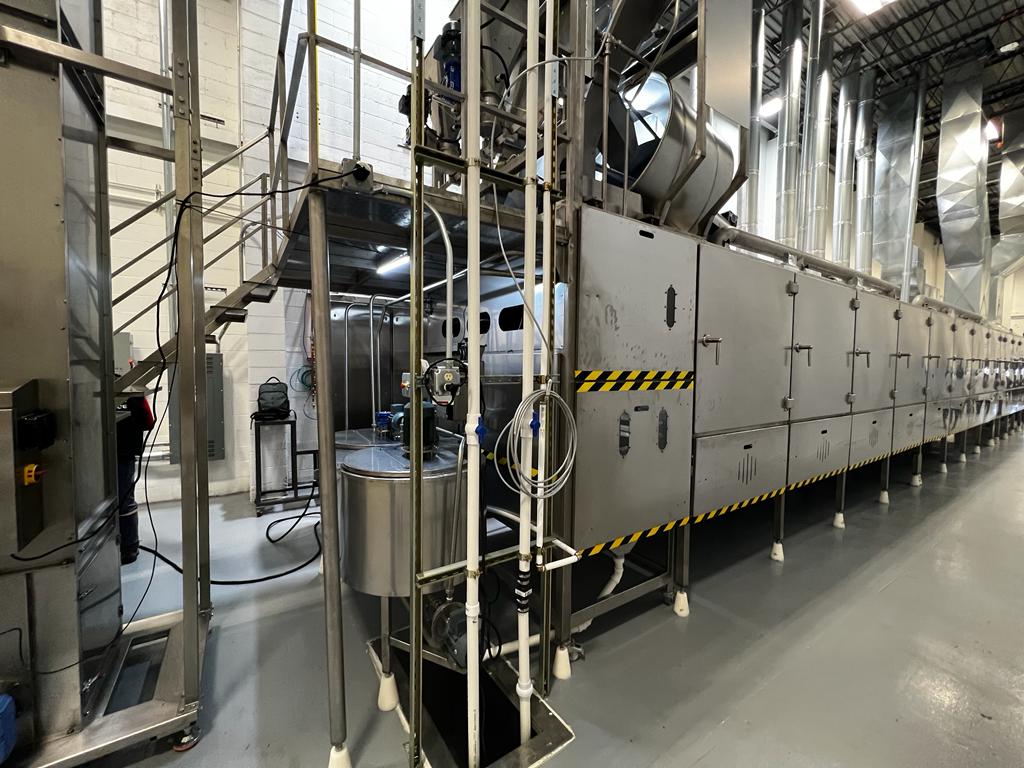
How oil roasting works
In an oil fryer, product moves through a bath of hot oil for a set time, then drains and cools. Oil transfers heat faster than air, so roasting times are usually shorter. The oil also helps seasoning stick to the product. Texture is not set by the method alone: product moisture, temperature, time and cooling all shape the final crunch.
- Fast, uniform heat transfer
- Often a richer flavor and golden color; final texture also depends on product moisture, oil temperature, time and cooling
- Good seasoning adhesion without a separate oil spray step
- Requires oil management: filtration, top-up, oil quality monitoring and safe disposal
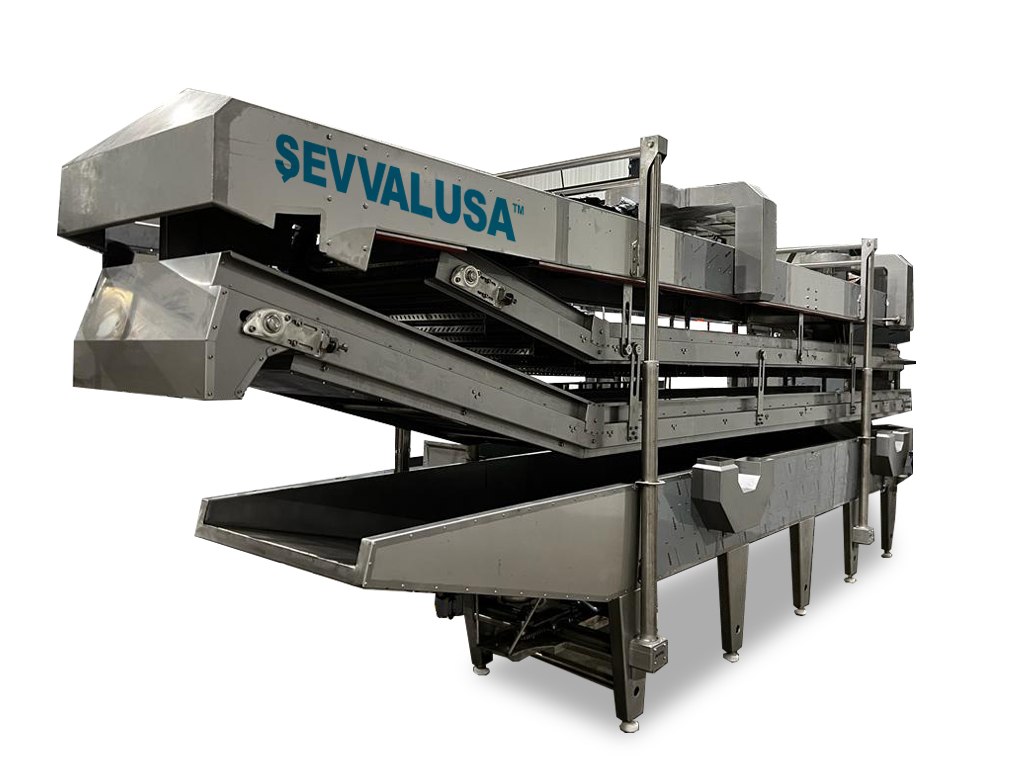
Side-by-side comparison
| Factor | Dry roasting | Oil roasting |
|---|---|---|
| Heat medium | Hot air | Hot vegetable oil |
| Added fat | None (natural nut oil remains) | Some cooking oil is absorbed |
| Typical products | In-shell peanuts, in-shell sunflower and pumpkin seeds, in-shell pistachios; a wide range of nut kernels and selected coated products | A wide range of nut kernels and selected coated products (not in-shell products) |
| Flavor and texture | Clean, nutty, natural | Often richer; texture depends on moisture, temperature, time and cooling |
| Main utilities | Natural gas or propane, electricity, exhaust | Oil heating (gas or thermal fluid), electricity, oil handling |
| Ongoing costs | Fuel and electricity | Fuel, electricity and cooking oil |
| Cleaning | Belt washing and dry brushing | Oil draining, filter cleaning and degreasing |
Shelf Life: What Affects It
Shelf life depends on more than the roasting method. All nuts contain natural oils that oxidize over time and can turn rancid; oil-roasted products also carry some absorbed cooking oil, so the frying oil quality matters too. The main factors are:
- Oil quality and oxidation: fresh, well-filtered frying oil and a controlled oil turnover for oil roasting; the natural oil content of the nut for both methods
- Cooling and moisture: fast, even cooling to the right temperature and target moisture before packaging
- Packaging: barrier film, nitrogen flushing or low-oxygen packaging, and good seals
- Storage: cool, dry storage away from light and heat
Shelf-life targets should be confirmed with your own product, packaging and storage tests.
Food Safety: Roasting as a Validated Process Step
Roasting is evaluated for more than color and flavor. In many nut operations, roasting is a step in the food safety plan, for example as a pathogen-reduction step under FDA Preventive Controls (FSMA). Roast color does not prove lethality: the time and temperature the product actually reaches must be validated for your product, line and settings, typically with a qualified process authority, and then monitored and recorded in production.
When you compare equipment, ask how the line supports validation and monitoring: temperature control and recording, consistent residence time and bed depth, and sanitary design for cleaning.
Dry Roasting vs. Oil Roasting: Operating Cost Considerations
The right choice is rarely decided by the purchase price alone. Look at the total cost of ownership over the life of the line. The main factors are:
- Energy per pound of finished product: gas or propane and electricity per lb, at your real production hours and product mix
- Cooking oil (oil roasting only): oil absorbed by the product, oil top-up, filtration, replacement and disposal
- Labor, cleaning and maintenance: operator hours, belt washing or oil-system cleaning, and planned maintenance
- Product yield and moisture loss: weight lost during roasting and how much product meets your spec
- Equipment utilization and changeovers: how many hours the line runs and how often you switch products
These costs depend on capacity, product type and operating hours, so they should be calculated for your plant rather than taken from a general rule. SEVVALUSA can prepare this comparison as part of a line proposal.
Which method should you choose?
Choose dry roasting if
- Your customers want “dry roasted”, no-added-oil or clean-label products
- You roast in-shell products such as peanuts, sunflower seeds, pumpkin seeds or pistachios (oil roasting is not used for in-shell products)
- You want to avoid buying, storing and disposing of cooking oil
- You plan to season or coat after roasting with a separate seasoning system
Choose oil roasting if
- Your product spec calls for an oil-roasted flavor and texture
- You roast kernels or coated nuts and want an oil-roasted taste
- You need strong seasoning adhesion
- Your plant can handle oil storage, filtration and disposal
Many processors run both: a dry roasting line for in-shell and premium products, and an oil fryer for snack nuts. In some plants the two lines can share downstream equipment such as seasoning, conveying and packaging. Oil-roasted products usually need their own oil drainage and cooling step, so shared equipment is evaluated project by project.
Questions to answer before you size the line
- Which products and how many lb/hr of each, now and in three to five years?
- Raw, blanched or in-shell? Target moisture and roast color?
- Seasoning, salting or coating after roasting?
- Available utilities: natural gas or propane, electrical supply (voltage and phase), compressed air, water and drains
- Floor space, ceiling height and exhaust routing
- Cleaning and sanitation requirements, and how often products change
How to Select Industrial Nut Roasting Equipment
Choosing between a continuous dry roaster and an industrial oil fryer requires more than comparing roasting methods. U.S. food processors should evaluate production capacity in lb/hr, product specifications, available utilities, sanitation requirements, plant layout and future expansion plans.
SEVVALUSA helps processors evaluate these requirements and develop equipment configurations for new production lines or existing plant upgrades. Our team can review your product specifications, target capacity and facility layout to recommend an appropriate roasting solution.
Dry roasting equipment
- Continuous belt roasters: for steady, high-volume production of one or a few products; product moves through heating and cooling zones on a belt.
- Batch roasters: for smaller volumes, frequent product changes, specialty or premium products, and R&D.
- Multilayer conveyor roasters: for long residence times in a compact floor space.
Oil roasting equipment
- Continuous fryers: for high-volume kernel and snack-nut production with oil filtration and controlled residence time.
- Batch fryers: for smaller runs and frequent recipe changes.
What sets the size of the line
- Target output in lb/hr for each product, now and in three to five years
- Number of products and how often you change between them
- Hours of operation per day and per week
- Downstream steps: cooling, seasoning or coating, sorting and packaging
- Available floor space and utilities
Capacity always depends on the product, its moisture and the roast specification, so ask for lb/hr figures based on your own product.
Buyer’s Checklist: What to Ask Before You Choose a Roasting Line
Once you know which roasting method fits your product, the next step is comparing equipment proposals. These questions help purchasing managers, plant engineers and owners compare suppliers on the same basis:
- Capacity basis: Is the stated lb/hr for your product, at your target moisture and roast color, or for a reference product?
- Process trial: Can your product be test-roasted before purchase, and will you receive the roast profile and results?
- Utilities: What gas (BTU/hr), electrical supply (voltage, phase, 60Hz), compressed air, water and exhaust does the line need, and what must your plant provide?
- Layout: What floor space, ceiling height and access for cleaning and maintenance are required? Is a layout drawing included in the proposal?
- Scope of supply: Which items are included (feeding, roasting, cooling, seasoning, conveying, packaging, controls) and which are by others?
- Food safety: How does the line support your food safety plan and process validation, and which cleaning and sanitation steps are designed in?
- Factory acceptance test (FAT), installation and training: Who performs them, where, and what is included?
- Service and spare parts: Where is the service team based, how are service calls handled, and are critical spare parts stocked in the U.S.?
- Total cost of ownership: Ask for energy, oil (if any), labor and maintenance estimates for your product mix, not only the equipment price.
Comparing proposals on these points makes the difference between machines, lead times and support visible before you commit to a line.
How SEVVALUSA helps
Not sure whether dry roasting or oil roasting is right for your product? SEVVALUSA helps U.S. food processors evaluate roasting technology, production capacity, plant utilities, equipment layout and downstream processing requirements before investing in a new line. We design, supply, install and service dry roasting lines, oil fryers and complete turnkey nut processing lines. Our engineering team works from your product list, capacity and plant layout, and our U.S. team in Virginia Beach, VA handles installation, operator training, spare parts and technical support.
Request a Technical Evaluation
Send us your products, target lb/hr, operating hours and plant utilities. Our engineering team will recommend a roasting method and line configuration for your plant.
Or call (757) 991-1665.
Related guides: Peanut Roasting Line Planning Guide for U.S. Processors · Continuous nut roasters · Industrial oil fryers
Frequently asked questions
What is the best roasting method for commercial peanut production?
It depends on the product. In-shell peanuts are dry roasted. Peanut kernels can be dry roasted or oil roasted: dry roasting for “dry roasted” and no-added-oil products, oil roasting when the product specification calls for an oil-roasted flavor. Many commercial plants run both.
How much does an industrial nut roasting line cost?
There is no single price, because cost is driven by the project. The main factors are target capacity in lb/hr, the number of products, roasting method (dry, oil or both), the level of automation, downstream equipment such as cooling, seasoning, sorting and packaging, utilities and installation work, and the scope of training and service. Operating cost (energy, oil, labor, maintenance and yield) matters as much as the purchase price. SEVVALUSA prepares a project-specific proposal after reviewing your products and plant.
What capacity industrial nut roaster do I need for my factory?
Start from your target output in lb/hr for each product, now and in three to five years, then factor in operating hours, product changeovers and downstream line speed. Capacity depends on the product, its moisture and the roast specification, so ask for lb/hr based on your own product.
Can the same roaster handle in-shell nuts and kernels?
Often yes with a dry roaster, by adjusting temperature, airflow, belt speed and bed depth for each product. The lb/hr capacity differs between in-shell and kernel products.
How do I compare roasting capacity between suppliers?
Ask for lb/hr for your own product at your target moisture and roast color, not for a reference product, and confirm the operating hours behind the figure.
Is a dry-roasted nut always lower in fat?
Not automatically. Dry roasting adds no cooking oil but does not remove the natural oil in the nut. Compare the same product and recipe.
Is oil-roasted always crunchier?
No. Texture depends on product moisture, temperature, roasting time and cooling, not on the method alone.
Which method is faster?
Oil transfers heat faster than air, so oil roasting times are usually shorter. Actual capacity depends on the product, the machine size and the roast specification.